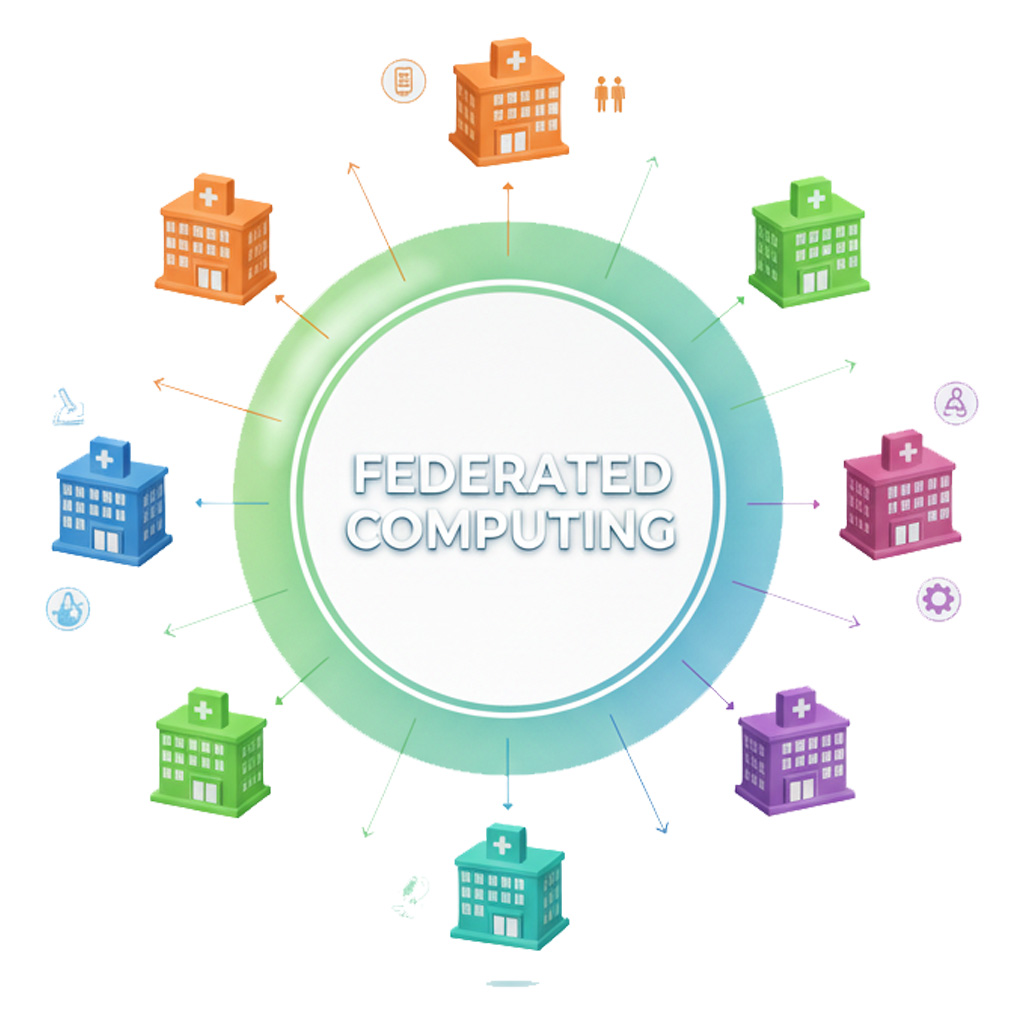
Federated computing is a new model for conducting clinical research without centralizing sensitive patient data. Instead of moving data into a single repository, federated computing allows each site to keep data local while participating in shared analyses.
Federated computing is a new model for conducting clinical research without centralizing sensitive patient data. Instead of moving data into a single repository, federated computing allows each site to keep data local while participating in shared analyses.
Instead of transferring patient-level data, research queries or analytic models are securely deployed to each site. Sites execute these analyses locally and return aggregated outputs or model parameters, enabling collaboration without exposing raw clinical data.
Why It Matters
Federated computing enables clinical research teams to:
Conduct multi-site and network-based studies without centralizing data
Work with larger, more diverse patient populations across institutions
Reduce operational complexity tied to data transfer, duplication, and governance
Preserve institutional control over data while contributing to shared research
Research Impact
By allowing insights to be generated across distributed datasets, federated computing supports scalable real-world evidence generation and collaborative clinical research—while maintaining data locality, security, and trust.
Federated computing enables collaboration at scale—without moving the data.