Federated Computing and Brazil’s LGPD

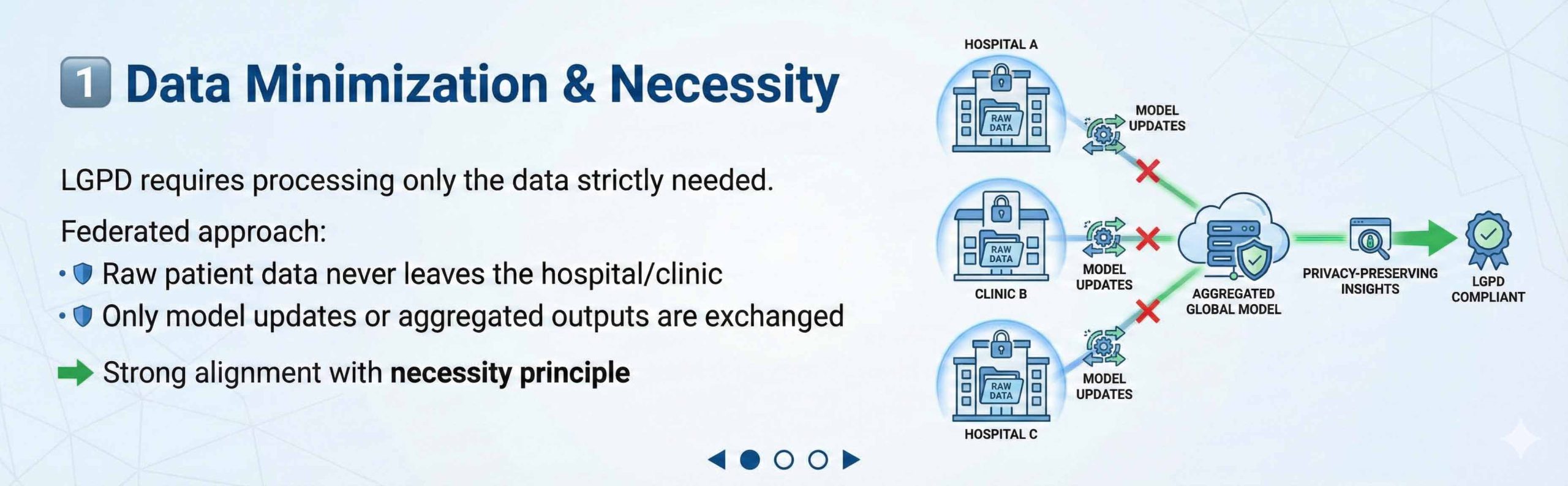
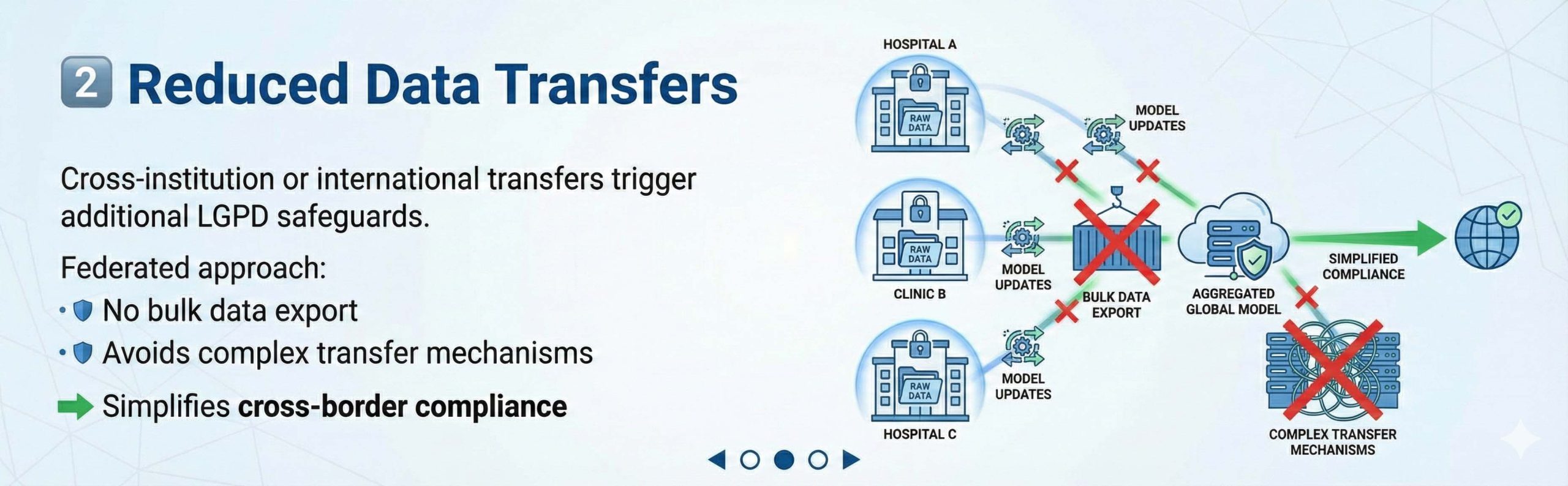
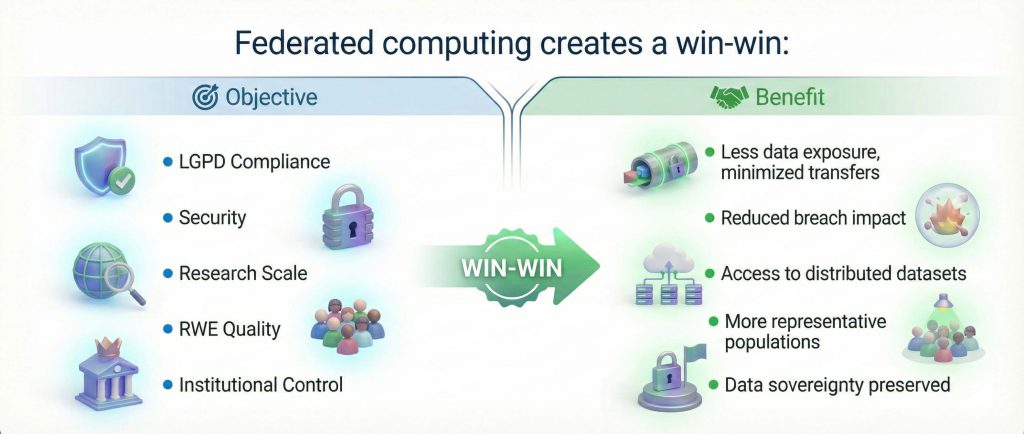
Federated computing (or federated learning/analytics) is an architecture where data stays within the local institution while models or queries travel across participating nodes. Only aggregated insights, parameters, or statistics are shared centrally — not raw personal data.

This approach is particularly powerful for organizations that want to generate Real World Evidence (RWE) while maintaining LGPD compliance.


Federated Computing and Brazil’s LGPD

Federated computing (or federated learning/analytics) is an architecture where data stays within the local institution while models or queries travel across participating nodes. Only aggregated insights, parameters, or statistics are shared centrally — not raw personal data.

This approach is particularly powerful for organizations that want to generate Real World Evidence (RWE) while maintaining LGPD compliance.
🇧🇷 Why this matters under LGPD

The LGPD emphasizes:

  • Necessity (data minimization)
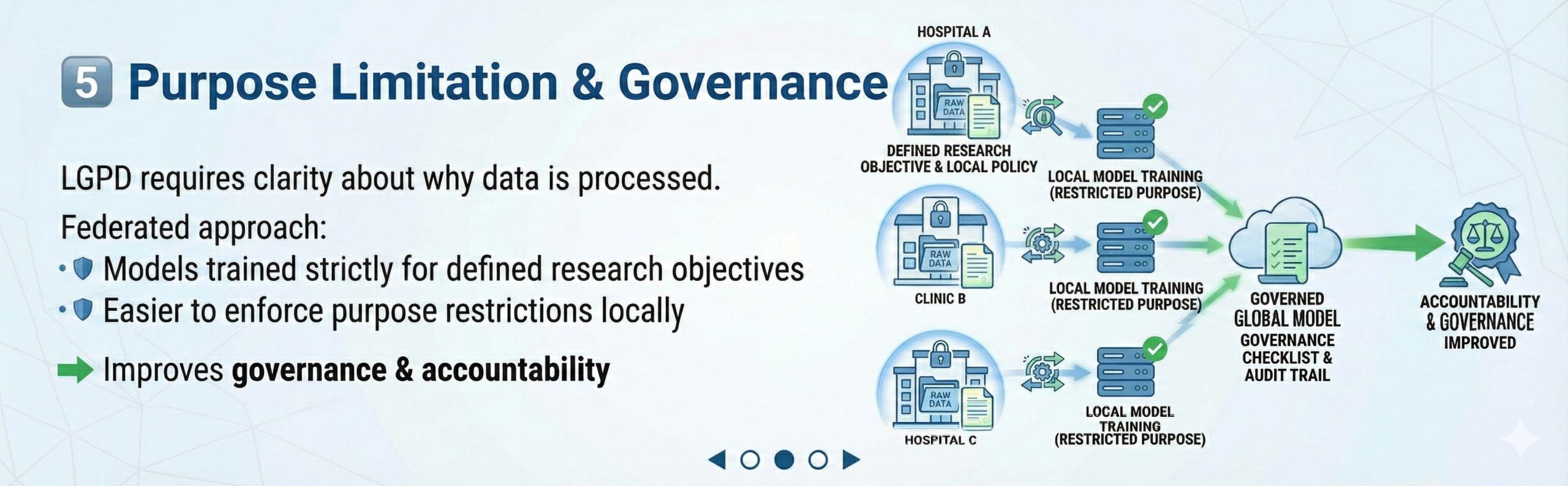
  • Purpose limitation
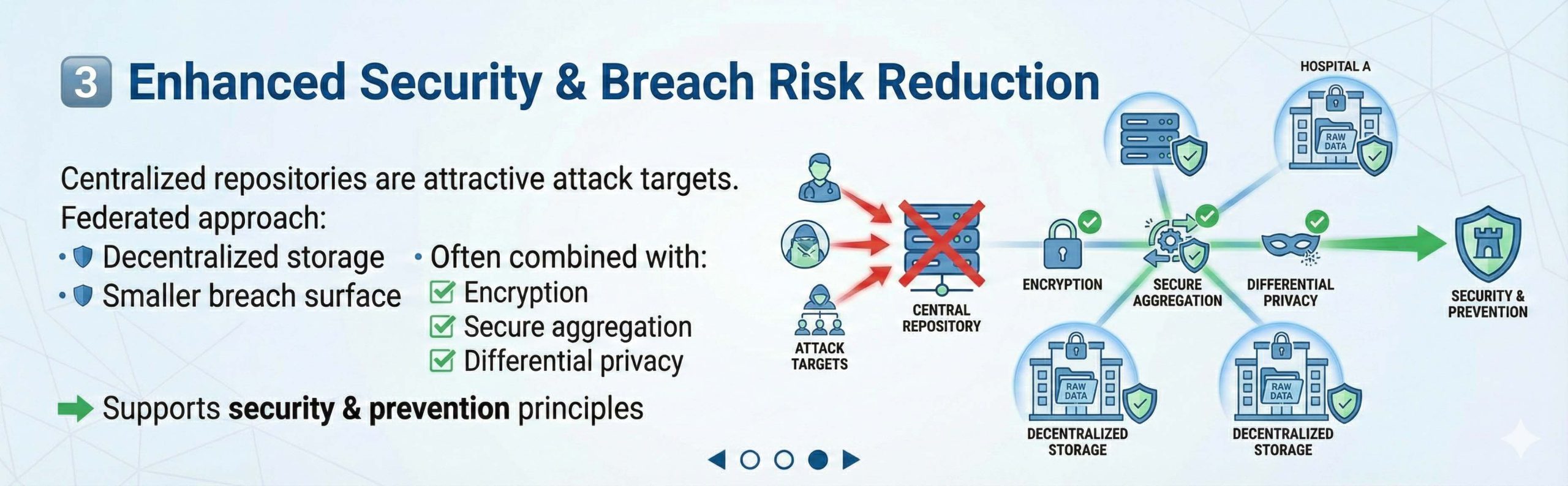
  • Security & prevention
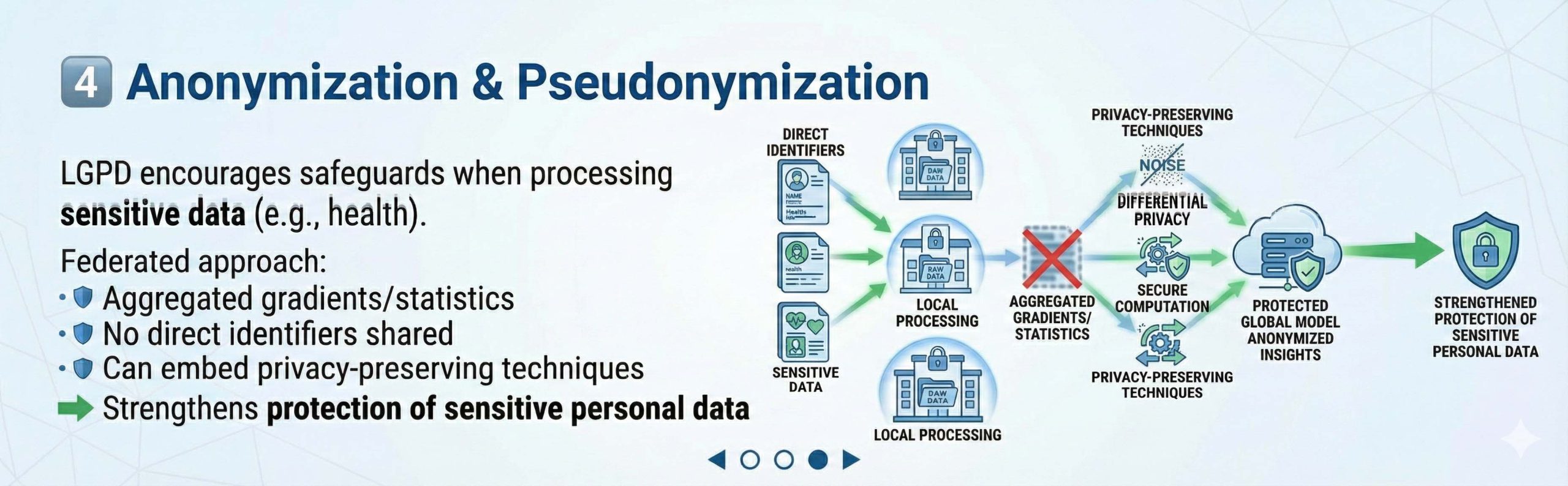
  • Anonymization/pseudonymization
  • Accountability

Traditional centralized data pooling can increase:

  • Privacy risk
  • Cross-border transfer complexity
  • Breach exposure
  • Consent/legal basis challenges

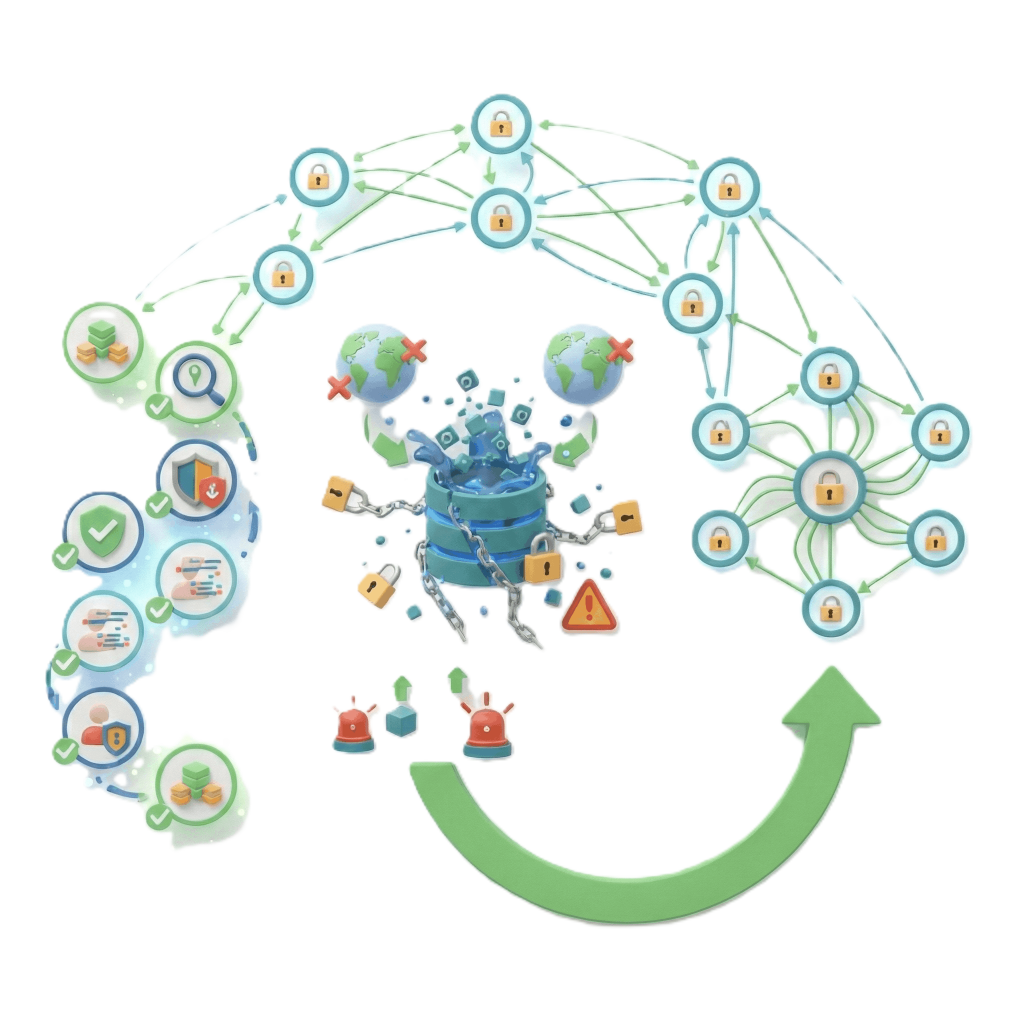
Federated computing directly mitigates many of these issues.

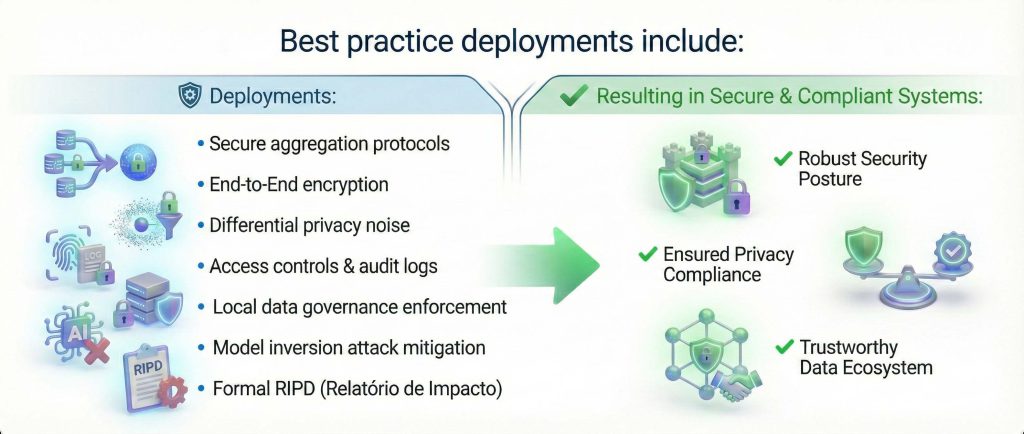
🔐 How Federated Computing Supports LGPD Compliance

🧪 How Federated Computing Enables Real World Evidence (RWE)

RWE relies on large, diverse datasets from real clinical practice.

Federated systems allow:

  ✔ Multi-site collaboration
  ✔ Larger effective sample sizes
  ✔ Inclusion of sensitive datasets (e.g., EHR, imaging, genomics)
  ✔ Faster study execution without data migration

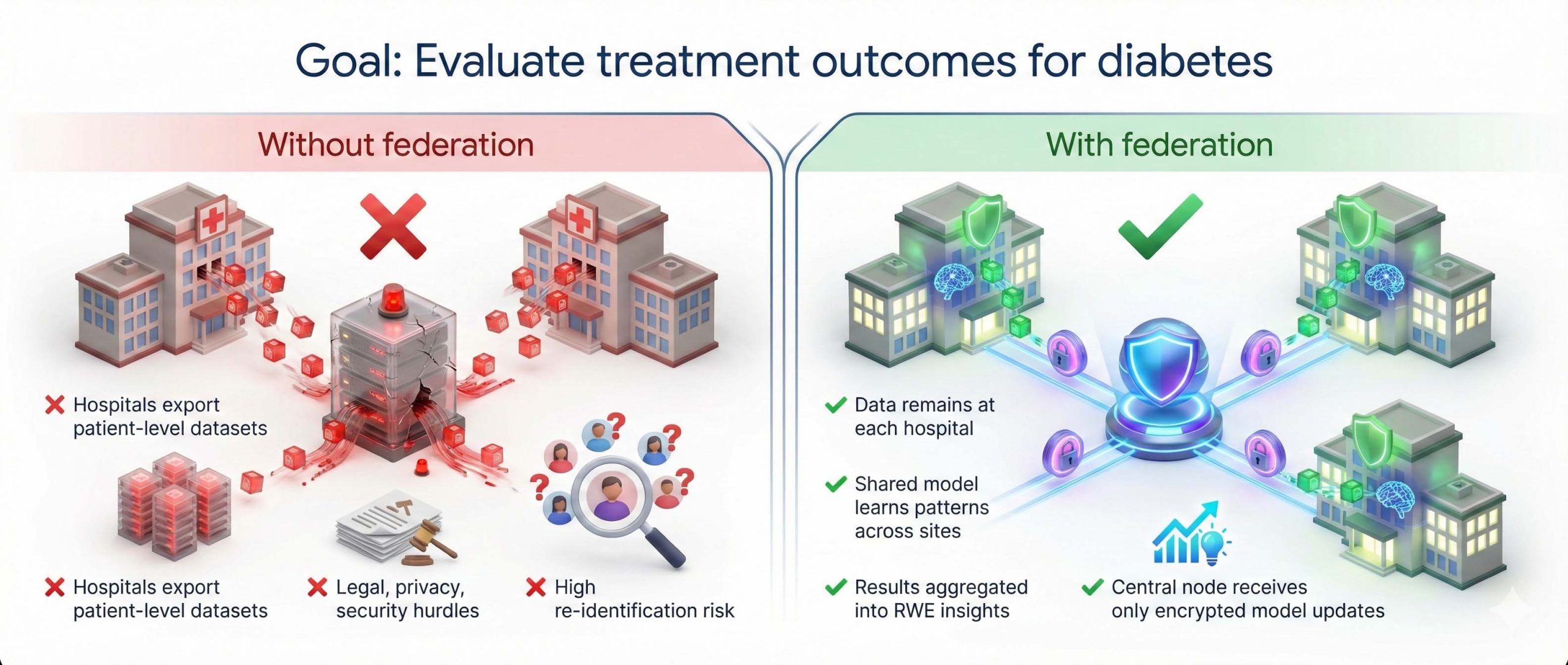
Example: Multi-Hospital Study

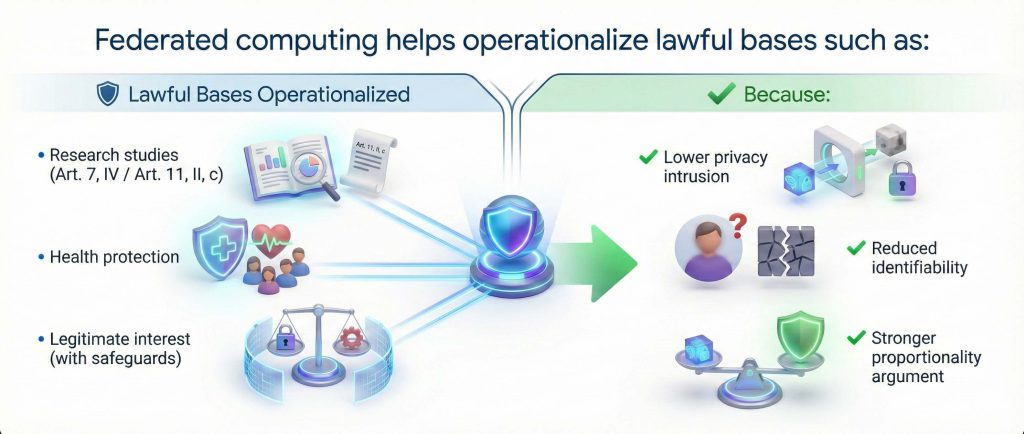
⚖️ LGPD Legal Bases & Federated Research

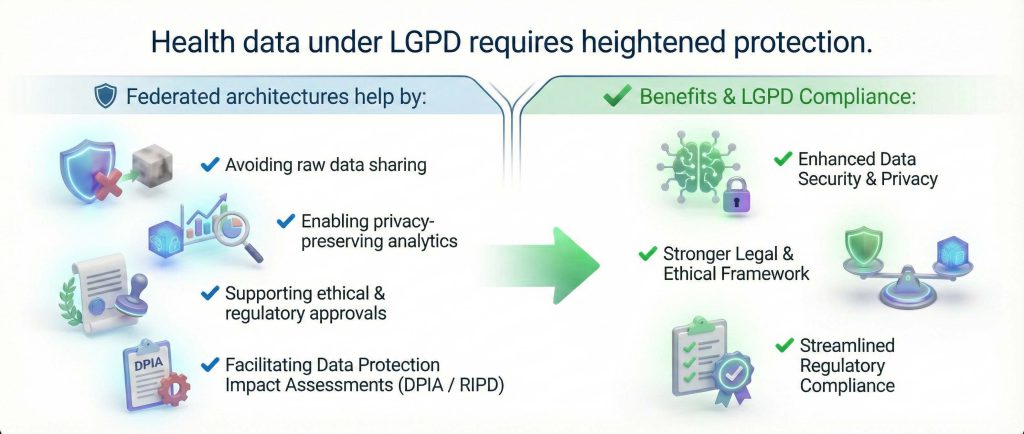
🏥 Special Relevance for Health Data (Sensitive Data)

🛠️ Key Compliance Enhancers in Federated Systems

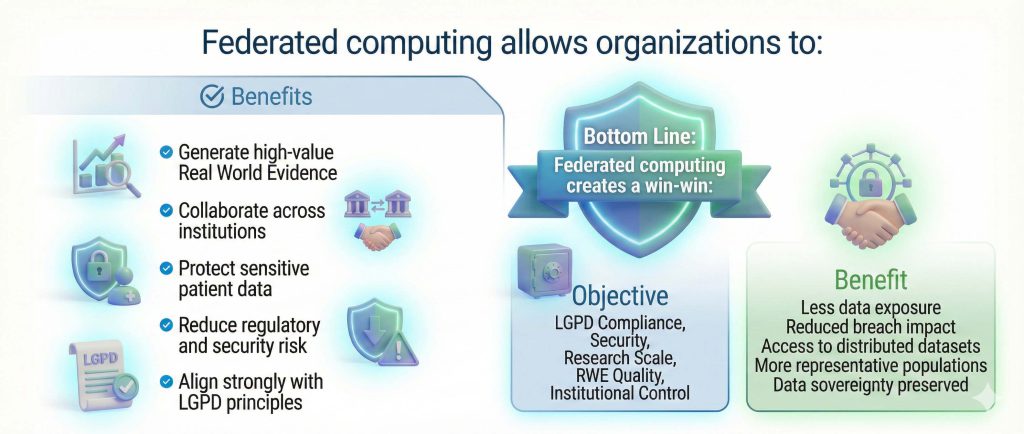
✅ Strategic Benefits

🚀 Bottom Line

Contact Us