Artificial Intelligence's Role in Patient Recruitment for Clinical Trials
Solve Your Biggest Bottleneck with AI-Driven Precision
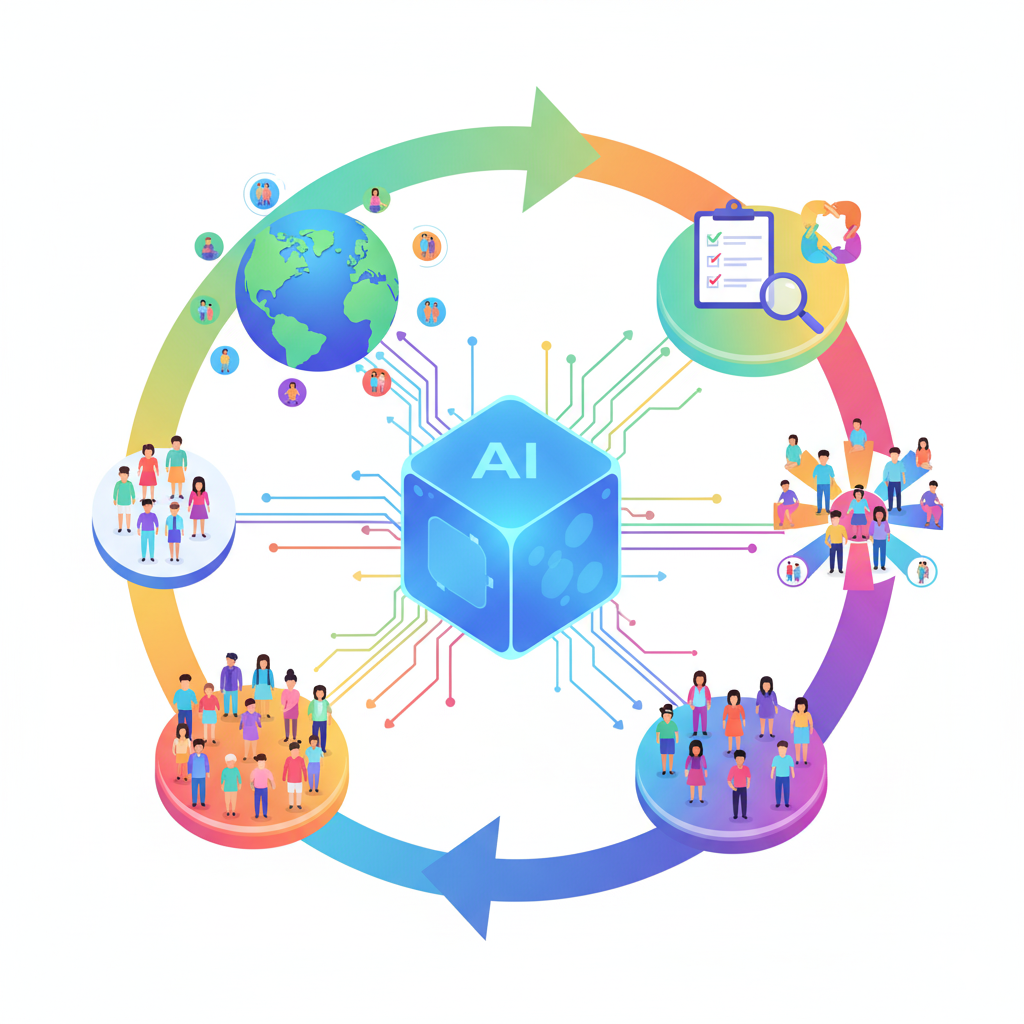
Traditional recruitment is manual, time-consuming, and often results in costly delays. AI fundamentally changes the game by leveraging vast datasets to find, match, and engage the ideal candidates for your specific protocol.
Artificial Intelligence's Role in Patient Recruitment for Clinical Trials
Solve Your Biggest Bottleneck with AI-Driven Precision
Traditional recruitment is manual, time-consuming, and often results in costly delays. AI fundamentally changes the game by leveraging vast datasets to find, match, and engage the ideal candidates for your specific protocol.
Key Ways AI is Revolutionizing Patient Recruitment:
Intelligent Patient Identification & Matching:
EHR and RWD:
The use of advanced Natural Language Processing (NLP) to instantaneously analyze structured and unstructured data (physician notes, medical histories, claims data) from Electronic Health Records (EHRs) and Real-World Data (RWD) can help find the right patients.
Precision Screening:
AI rapidly compares complex inclusion/exclusion criteria against patient data with high accuracy, identifying eligible candidates in minutes, not months. This dramatically reduces manual pre-screening time and site burden.
Protocol Optimization & Feasibility:
AI models can simulate different protocol scenarios against patient population data to accurately predict enrollment rates and identify the most feasible trial sites before the study even begins.
Enhanced Diversity and Representation:
AI tools can identify and reach patients in traditionally underrepresented populations using geographical and demographic data, helping your study meet critical diversity goals and ensuring your results are broadly applicable.